Fengkou think tank | Eight experts’ firewire interpretation: What is the impact of the most fierce "interest rate cut"?

Liu Xiao, chief reporter of Fengkou Finance
At the beginning of the Year of the Loong, the real estate market will welcome heavy profits again!
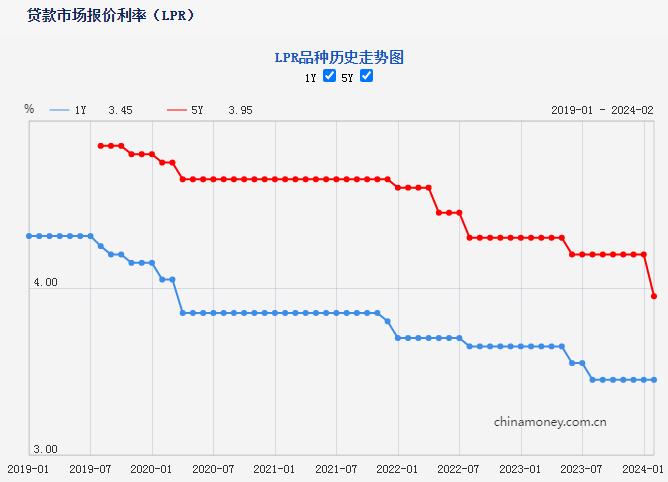
Authorized by the People’s Bank of China, the National Interbank Funding Center announced that on February 20, 2024, the quoted interest rate (LPR) of the loan market was: the one-year LPR was 3.45%, which remained unchanged, and the one-year LPR was 3.95%, a decrease of 25 basis points.
The quoted interest rate of the loan market is quoted by the quotation banks according to the open market operating interest rate (mainly referring to the medium-term lending convenience interest rate) and calculated by the National Interbank Funding Center, which provides pricing reference for bank loans. At present, LPR includes one-year and five-year varieties.
According to Fengkou Finance, the last adjustment of LPR dates back to August 2023, when the one-year LPR dropped by 10 basis points, and the LPR for more than five years remained unchanged. In 2023, the one-year LPR decreased by 20 basis points, and the LPR decreased by 10 basis points over five years. The one-time reduction of LPR for more than five years is 25 basis points, which is the fiercest rate cut ever recorded in history, releasing the signal of lowering the medium and long-term loan interest rate.
Although the MLF interest rate as the medium-term policy interest rate remained unchanged in February, the market had strong expectations for the decline of LPR this month. Many experts interviewed by Fengkou Finance also said that the LPR quotation in February may drop separately.
How to treat the LPR falling by 25 basis points alone over 5 years? What impact does this have on the real estate market? What other policies are expected from the follow-up central bank? On the morning of the 20th, Fengkou Finance interviewed a number of experts in real estate and finance for the first time.
What does asymmetric decline mean?
Fengkou Finance: The decline of LPR this month is not synchronized with the adjustment of policy interest rate. What do you think of this decline? Why are the two varieties asymmetrically declining?
Dong Ximiao, Principal Investigator of Zhaolian and Part-time Researcher of Financial Research Institute of Fudan University:On February 18th, the People’s Bank of China launched reverse repurchase operation and one-year medium-term lending convenience operation, and the interest rates were the same as last month. LPR is based on the one-year MLF interest rate. The MLF interest rate has not changed, and the probability of LPR being flat is high. However, since 2023, the deposit interest rate has been lowered four times in a row, and the overall RRR reduction has been implemented on February 5, 2024. The cost of bank funds has been reduced, and there is room for LPR reduction. Previously, the central bank’s repeated statements will lead to the decline of LPR, and it is more likely that LPR will decline over five years. Therefore, the asymmetric decline of LPR is basically in line with market expectations.
Wang Qing, Chief Macro Analyst of Oriental Jincheng:The LPR quotation of the two maturity varieties is asymmetric adjustment, mainly because the decline of LPR for more than five years since 2019 is 15 basis points smaller than that of LPR for one year. LPR quotation over five years is the pricing benchmark for individual housing loans and medium-and long-term loans of enterprises and institutions. At present, the property market continues to operate at a low level, and the demand for steady growth of investment is high. It is necessary to significantly reduce LPR quotation over five years. However, the one-year LPR quotation remains unchanged, which will help stabilize the bank’s net interest margin, which has been at a historically low level, and make room for a significant decline in the LPR quotation for more than five years.
Chang Yang, Chief Analyst of Policy Group of Zhongtai Securities Research Institute:This asymmetric decline reflects at least three levels of intention:
First, the monetary policy is also in line with the smooth start of the economy. After the Spring Festival holiday, it is more obvious to start work from the fund supply side, and reduce the loan interest and financing cost to cooperate with the smooth start of the economy in 2024.
Second, the asymmetric downward adjustment of interest rates at different maturities indicates that the target that the policy wants to play a role is focused, keeping the one-year LPR unchanged, or indicating that the stimulus intention to manufacturing investment and consumption is relatively stable.
Thirdly, due to the relatively strong correlation between the five-year LPR and the real estate market, from the early stage, lowering the five-year LPR interest rate is also a part of the combination of demand-side policies in the real estate market. At this stage, the five-year LPR interest rate is greatly reduced by 25 BP, and combined with the recent intensive introduction of more policy measures around the real estate market, it fully reflects the policy intention of interest rate policy to participate in activating the real estate market and promoting a virtuous circle of the real estate market.
Fengkou Finance: How to treat the decline of 25 basis points? Did it exceed expectations?
Dong Ximiao, Principal Investigator of Zhaolian and Part-time Researcher of Financial Research Institute of Fudan University:The asymmetric decline of LPR was expected, but the range of LPR over five years exceeded expectations. Since the reform in 2019, the decline of LPR over five years is 15 basis points smaller than that of LPR over one year. After this asymmetric decline, the spread between the LPRs of the two maturities narrowed, which helped to reduce the mismatch of loan maturities. The Report on Monetary Policy Implementation in China in the Fourth Quarter of 2023 published by the People’s Bank of China shows that the cost of social financing has decreased steadily, and the weighted average interest rate of new corporate loans in December was 3.75%, which was 0.22 percentage points lower than the same period of last year. In this case, the one-year LPR will remain unchanged, which will help ease the downward pressure on bank spreads and create more room for the decline of LPR over five years. This time, the LPR for more than five years dropped by 25 basis points, far exceeding market expectations, setting the biggest decline since the reform of LPR formation mechanism in 2029.
Lian Ping, Chairman of China Chief Economist Forum and President of Guangkai Chief Industry Research Institute:The structural feature of this LPR interest rate cut is obvious, that is, it mainly reduces the five-year interest rate by 25 BP. Although the strength seems to be small, it has actually exceeded the market’s previous expectations. This is a balanced decision made by the central bank after integrating various factors inside and outside, which is in line with the tone and thinking of the current monetary policy "flexible, moderate, accurate and effective".
Considering the great uncertainty of the global economy in the future, China’s central bank needs to reserve a certain interest rate space to cope with the potential downward trend of economic growth in the future. Domestically, there should be a certain balance between the intensity of interest rate cuts and the endurance of the banking system. The downward trend of LPR interest rate has a positive impact on the financing cost of the real economy and the housing purchase cost of residents. However, if the downward trend of LPR interest rate is too large and the pace is too fast, it will also increase the operating pressure of commercial banks, which will have a certain impact on the enthusiasm and ability of banks to maintain reasonable credit growth, and may also affect the ability of banks to dispose of non-performing assets.
Pang Yao, Chief Economist of Jones Lang LaSalle Greater China:The asymmetric reduction of five-year LPR is slightly higher than the market expectation, but the change of LPR in the past four and a half years shows that the cumulative reduction of five-year LPR is less than 10 basis points in one year. Considering the changes in the current real estate policy, the financial support for the high-quality development of real estate and the care for the confidence of the demand side and the supply side, it is appropriate to reduce the five-year LPR this time.
In fact, this decline is understandable. Looking at the data of the past four and a half years, the one-year period has dropped by about 75 basis points, and the five-year period has dropped by 65 basis points, so there is a certain necessity and possibility to even it out. On the other hand, from the sales end to the investment end, from the supply side to the demand side, real estate still needs financial support. Coupled with the optimization and adjustment of the real estate policy, it is unexpected and reasonable to asymmetrically reduce 25 basis points.
How much can the mortgage be repaid less?
Fengkou Finance: What positive impact will this have on the real estate market?
Yan Yuejin, Research Director of Yiju Research Institute:The real estate market is currently in the stage of stabilization and recovery, but the recovery process needs to be consolidated. The interest rate cut is beneficial to the reduction of capital cost and directly leads to the reduction of mortgage, which has a positive impact on the mortgage market. According to our simple calculation, if the loan principal is 1 million and the principal and interest are repaid in 30 years, the monthly mortgage payment of buyers can be reduced by about 150 yuan after this interest rate cut. It is a relatively large burden reduction, which will help to further promote mortgage application and consumption. It also plays a positive role in the active follow-up housing market.
Ma Hong, Senior Research Fellow of Guangkai Chief Industry Research Institute:For the real estate market, lowering the medium and long-term LPR benchmark interest rate will help reduce the repayment pressure of residents buying real estate and existing mortgages. As the current recovery of commercial housing sales is less than expected, the recovery of market confidence needs more policy support and patience.
Based on the downward adjustment of the 5-year LPR benchmark interest rate, the mortgage interest rate of subsequent commercial banks will also respond to the downward adjustment. Assuming that the first home loan balance of 1 million, the matching principal and interest mortgage, and the 30-year loan term are taken as examples, the monthly payment will be reduced by about 145 yuan, and the total principal and interest will be reduced by about 52,000 yuan in 30 years. The preferential strength of this loan is quite remarkable, and the follow-up is expected to promote the incremental purchase of houses and other consumption areas, and promote the decline in commercial housing sales during the year to be narrower than that in 2023.
Dong Ximiao, Principal Investigator of Zhaolian and Part-time Researcher of Financial Research Institute of Fudan University:LPR with a term of more than 5 years is the pricing benchmark for individual housing loans and medium and long-term loans of enterprises and institutions. The sharp and unexpected decline of LPR over five years first sends a strong signal to boost residents’ housing consumption and promote the stable development of the real estate market. After the LPR decreases for more than five years, the interest expense of residents’ mortgage will be reduced, which will help boost residents’ willingness and ability to consume housing. For the existing mortgage, the mortgage interest rate will be adjusted after the repricing date; For new mortgages, it is expected that most banks will keep the increase unchanged on the basis of this LPR, thus reducing the real interest rate of new mortgages. At the same time, the LPR over five years will drop sharply, which will also reduce the medium and long-term loan interest rates of enterprises and institutions, and further stimulate the medium and long-term financing needs of enterprises and institutions. This will be conducive to major national projects and infrastructure construction with a relatively high proportion of long-term loans, and also help to reduce the pressure on local debt interest payments.
What are the follow-up policies?
Fengkou Finance: Further strengthen countercyclical and cross-cyclical adjustment. What other policy measures are expected in the follow-up?
Lian Ping, Chairman of China Chief Economist Forum and President of Guangkai Chief Industry Research Institute:Generally speaking, in the face of the complicated and severe domestic and international economic environment in 2024, it is difficult to solve all the problems through one or two specific policy tools. The macro-policy decision-making departments and the central bank will comprehensively implement policies to further strengthen counter-cyclical and cross-cyclical adjustment. On the one hand, fiscal policy and monetary policy should strengthen policy coordination, which is mainly reflected in the support of monetary policy to fiscal policy. On the other hand, for the monetary policy itself, the central bank has also made it clear that in 2024, it is necessary to give full play to the dual functions of aggregate and structure, strengthen the comprehensive application of various policy tools, and maintain a reasonable and abundant liquidity. In addition to moderately lowering the RRR and cutting interest rates, it is also necessary to make good use of structural tools such as refinancing small loans to support agriculture, rediscounting, universal micro-loan support tools, and mortgage supplementary loans (PSL).
Zhou Maohua, Macro Researcher of Financial Market Department of China Everbright Bank:This time, with the MLF interest rate stable, the central bank mainly guided the financing cost of the real economy to be further lowered through quantitative tools and reform measures. The main reason is that the central bank flexibly uses a variety of tools according to the actual macroeconomic situation and changes in the internal and external environment to improve the quality and efficiency of policies and better take into account the internal and external balance.
Although the one-year LPR interest rate remains stable, the central bank can still promote financial institutions to tap the potential of interest rate marketization reform through structural tools, reduce the weak links in the real economy such as small and micro, agriculture, rural areas and farmers, and focus on financing costs in emerging areas.
From the trend, domestic inflation is moderate and controllable, the international balance of payments remains basically balanced, and the central bank has sufficient policy space. At the same time, the overall asset quality and profitability of banks remain good, and LPR still has room for downward adjustment. As the economy is at a critical stage of recovery, tools such as subsequent interest rate cuts are still in the toolbox, but the specific implementation depends on the progress of domestic demand recovery, the pace of price recovery, and the recovery of real estate. If the recovery progress of consumption, prices and real estate is not satisfactory, it is not excluded that the central bank will further guide the market interest rate center to move down through interest rate cuts, RRR cuts and structural tools to provide additional impetus for the recovery of consumption and investment.
Wang Qing, Chief Macro Analyst of Oriental Jincheng:Mainly affected by factors such as the decline of the real estate industry and sluggish consumer demand, the official manufacturing PMI index has continued to run in the contraction range since the fourth quarter of 2023. This means that the macroeconomic operation has been stable and weak in the near future, and it is necessary to implement countercyclical adjustment of macroeconomic policies. Looking back at history, we can see that once the official manufacturing PMI index runs in the contraction range for more than three consecutive months, the possibility of monetary policy response will increase significantly. In addition to lowering the RRR, lowering the policy interest rate is also a common response.
Therefore, based on the current economic and price trends, we judge that the possibility of MLF interest rate falling in the short term is still relatively large. This will drive the LPR quotation of two maturity varieties to continue to decline, which in turn will drive the loan interest rates of enterprises and residents to continue to decline and boost the total macroeconomic demand. At the same time, the continuous downward adjustment of LPR quotation will drive down the loan interest rate, which will also provide more favorable conditions for the resolution of local debt risks this year.
Editor: Liu Xiao
Audit: Sun Tong
Reporting/feedback