Intergenerational relationship has gradually become a new focus of TV series.
[audio-visual observation]
[Sponsored by Guangming Daily Literature and Art Department of China Television Art Committee]
Author: Xing Ge (Senior Editor of China Television Arts Committee)
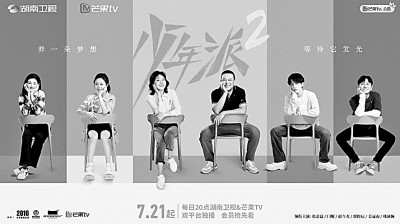
The Great Exam, which has just started broadcasting, has aroused heated public discussion. It shows the story of high school students and their parents facing the test of life together under the background of epidemic situation. "Youth School 2", which ranks in the forefront of TV series ratings in the same period in terms of single channel ratings and user scale, tells the process that Lin Miaomiao’s family is trying to move forward on the road to happiness, although they have their own troubles. Related topics have repeatedly appeared in Weibo’s "Basic Law of Genius", focusing on the story of mathematical genius Lin Zhaosheng, his daughter Lin Zhaori and high IQ teenager Pei Zhi seeking themselves in mathematical reasoning and double-time interaction … … Recently, many popular TV dramas have focused their creative vision on intergenerational relations, focusing on topics such as "how to solve intergenerational conflicts and contradictions" and "how to realize intergenerational interaction and communication" with vivid and interesting plots, forming a unique cultural phenomenon in which creation focuses on generations, public opinion pays attention to generations, and audiences think about generations.
Information picture
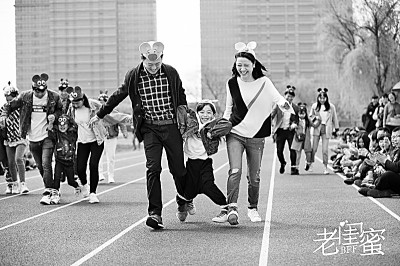
"Old Best Friend" stills information picture

"Basic Law of Genius" stills and pictures
Express modern interaction with vivid stories
In the current social transformation period, intergenerational relations not only involve the common differences in values and lifestyles of people born in different times due to different living environments, education levels, professional habits and life experiences, but also deeply discuss the potential influence of family of origin on children’s growth, the impact of population aging on families and other social issues. To some extent, intergenerational relationship is a microcosm of social relations, intergenerational conflict is a symptom of social problems, and intergenerational interaction is an important part of social communication. Therefore, paying attention to intergenerational topics is of positive significance for promoting mutual understanding among all groups and promoting the harmonious development of society.
In recent years, many TV drama creators have keenly captured this social trend and paid attention to intergenerational topics in succession. This is manifested in all kinds of works, especially in the creation of youth, education and family ethics, showing distinct characteristics of the times. For example, the issue of college entrance examination has become an important drama fulcrum in plays such as Big Exam, School of Teenagers, Little Joy, I don’t want to be friends with you, Growing Up with You, Little Shed-Up focuses on the earlier process of children’s promotion, Happy Family focuses on the relationship between adult children and their parents, and Little Parting and Taking Dad to Study Abroad focus on the issue of studying abroad. Discuss the topic of old-age care. TV plays cut into social texture by describing the state and development of intergenerational relations, and build a discussion field of social issues.
Solve intergenerational conflicts with a positive attitude
The development of science and technology and the progress of the times have accelerated the iteration of talents. School and future put pressure on the next generation, making them mature gradually in their growth; The plight of middle-aged and elderly people, such as having a second child, changing jobs and providing for the elderly, brings new challenges to the father generation, prompting them to constantly debug themselves and find new social orientation and life coordinates. These newly emerged TV dramas vividly show the dilemma and confusion of two generations, and their efforts to find a happy way out in their emotional entanglements with each other, thus enriching and deepening the understanding of intergenerational relations and spreading a relatively broad picture of social life.
As a plot breaking point, intergenerational conflicts are ubiquitous in related works, which constitute an important narrative power of plays. Conflict bears the important functions of releasing drama tension, shaping characters, transforming the relationship between characters and promoting the development direction of plots. In TV dramas that discuss intergenerational topics, the motive source of conflict is the ideological gap between the two generations. For example, in "I don’t want to be friends with you", Li Qianjin, a middle school girl, wants to know her father she has never met, is eager to end her life of renting and moving constantly, and runs away from home after a fierce conflict with her single mother Li Qingtong; In Little Joy, Qiao Yingzi suffers from depression due to the influence of her parents’ divorce and the strong pressure of her mother.
Creators usually take a positive attitude towards the performance of intergenerational relations, taking intergenerational communication as the keynote and adopting "conflict — — The way of reconciliation leads the will and emotion of two generations to integration. After Li Jin became friends with his mother Li Qingtong, he learned about her predicament, difficulties and sacrifices. Song Qian, Qiao Yingzi’s mother, constantly reflects on the bad influence of her paranoid behavior on her daughter. In the structure of the play, intergenerational conflict is the fruit of the relationship between characters and the development of plot, and also the cause of the trend of characters and the continuation of plot. It has the narrative function of pushing the plot to a climax, and its intensity and complexity have also laid a series of foreshadowing for the subsequent plot.
Promoting intergenerational communication with realistic thinking
How can intergenerational communication help two generations move from conflict to reconciliation? Different plays submitted their own answers. The representative models are the mode of seeking for oneself and the mode of value convergence. The mode of self-seeking means that two generations can actively reflect on themselves, correct themselves, go in both directions, and finally resolve conflicts. For example, "Little Joy" juxtaposes senior three children and senior three parents, and at the same time shows the children’s youth choices and the life tests that parents have to face under the pressure of college entrance examination. In the process of facing challenges and solving problems, the two sides constantly understand and understand each other, know and adjust themselves, and finally reach a settlement and complete their life growth. The value convergence mode means that two generations have found the common values and the meaning of life, and face the common value direction side by side, so as to respect and understand each other and achieve harmony. For example, in "Youth School 2", Wang Shengnan, who resigned in middle age, joined the hospice volunteer team under the influence of her husband Lin Dawei, regained his sense of value when helping others, and found a new way for himself to reintegrate into society; Their daughter, Lin Miaomiao, and her friends used the Internet to help seriously ill Yu Jiashi realize the dream of "Little Rabbit Traveling to China" and they also got spiritual growth. Yu Jia’s death made Lin Miaomiao unforgettable. Her father told her: "Death can end life, but it can’t end the emotional connection between people." The treatment of intergenerational relations in plays is based on the common value basis: inquiring about the meaning of life and pursuing the value of life. In the face of life itself,The value and significance of the two generations are the same, which is the fulcrum of the drama, the basis of the harmonious development of intergenerational relations, and the medium for the characters and the audience to reach emotional resonance.
Intergenerational relationship is a grand social issue, covering all aspects of study, work and life. Those problems scattered in everyone’s life involve the emotional maintenance of a family and even multiple groups, which are related to generations of people of all ages, and also affect the harmony of the whole society. Therefore, it is very important to establish good intergenerational relations, solve intergenerational conflicts and realize intergenerational communication. Recently, a number of TV dramas focusing on intergenerational relations seek to be superb in ideological conception, profound in human nature exploration, accurate in content expression and wonderful in form presentation. Through vivid writing of intergenerational communication, they deeply explore the value and significance of life, strive to improve the ideological height and artistic quality of their works, and implement the spirit of realistic creation in the nuances of audio-visual presentation.